











8 Best employee education benefits platforms for tuition support in 2026
Looking for education and tuition benefit platforms? Compare Forma's integrated benefits approach with Bright Horizons EdAssist and other education benefits platforms.
In this piece
Quick Answer: The best employee education benefits platform depends on how you want to structure tuition support. Forma is the best overall choice for employers that want to manage education assistance alongside LSAs, HSAs, FSAs, HRAs, and rewards in one flexible platform. SkillsWave is strong for skills-based learning, while Tuition.io and Bright Horizons EdAssist offer more specialized tuition support models.
The competition for top talent has never been fiercer, and employee education benefits have become a crucial differentiator for forward-thinking employers. Today, tuition support programs are no longer nice-to-haves; they're strategic investments that drive retention, engagement, and internal mobility while addressing critical skills gaps.
But here's the challenge: the landscape of education benefits platforms is increasingly complex. Some vendors specialize exclusively in tuition assistance, while others embed education support within broader flexible benefits ecosystems. The right choice depends on your organization's size, structure, administrative capacity, and vision for holistic employee benefits.
This guide evaluates the leading employee education benefits platforms for tuition support in 2026, helping you identify the solution that aligns with your total rewards strategy, operational needs, and employee expectations.
Key Takeaways
- Education benefits can strengthen retention, engagement, and employee development when programs are easy to access and aligned with workforce needs.
- The best tuition support platforms reduce administrative work by simplifying eligibility, approvals, reimbursements, reporting, and program management.
- Flexibility matters more than a one-size-fits-all approach, especially as employees pursue degrees, certifications, bootcamps, and other learning opportunities.
- Employee experience plays a major role in utilization, so intuitive interfaces, clear funding rules, and simple payment options should be priorities.
- Global employers need platforms that can scale across regions, with support for different currencies, providers, and local requirements.
- Benefits consolidation can make education programs easier to manage, particularly for organizations already offering multiple spending and health benefits.
- Forma stands out for employers that want tuition support within a broader benefits platform, combining education assistance with other flexible benefits in one system.
What is a platform for tuition support?
A platform for tuition support is a technology solution that helps employers design, administer, and deliver education assistance benefits to their employees. These platforms automate the workflows involved in offering tuition reimbursement, education stipends, or learning and development funds: from setting eligibility rules and processing claims to tracking utilization and ensuring compliance.
At its core, a tuition support platform serves as the operational backbone for education benefits programs. Instead of managing spreadsheets, paper receipts, and manual approvals, benefits teams use these platforms to create structured, scalable programs that employees can easily understand and access.
What to look for in an education benefits platform
Before diving into specific platforms, consider these essential evaluation criteria:
Integration and consolidation
Does the platform integrate with your existing benefits infrastructure, or does it require employees and administrators to manage yet another standalone system? Benefits consolidation reduces complexity and improves the employee experience.
Flexibility and customization
Can you configure eligibility rules, funding levels, and approved expenses to match your unique education assistance policy? The best platforms adapt to your program design rather than forcing you into rigid structures.
Employee experience
Is the interface consumer-grade and intuitive? Do employees have clarity on available funds, approval workflows, and reimbursement timelines? Friction in the user experience directly impacts program utilization.
Global capabilities
If you are part of a global benefits team operating across multiple countries or regions, does the platform support international education providers, multi-currency reimbursements, and local compliance requirements?
Administrative efficiency
How much manual work is required from your benefits team? Look for platforms with automated claims processing, real-time reporting, compliance guardrails, and clear audit trails.
Scope of eligible programs
Does the platform support only traditional degree programs, or does it also accommodate certifications, skills training, bootcamps, language learning, and other modern education pathways?
Best employee education benefits platforms of 2026 at a glance
1. Forma: Modern benefits platform with integrated education assistance
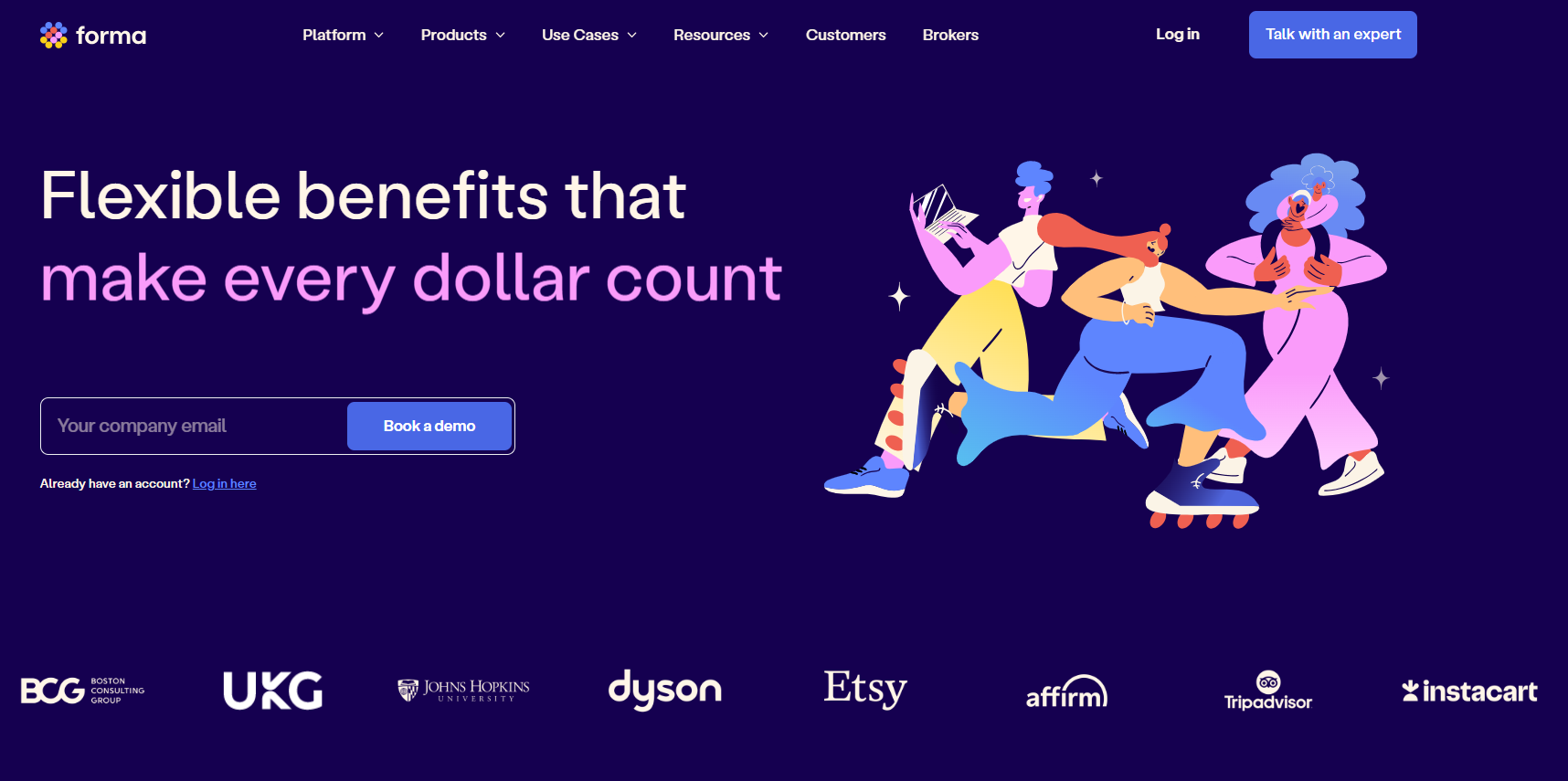
Best for: Employers seeking to consolidate education support within a comprehensive, flexible benefits ecosystem
Forma stands out by embedding education assistance accounts within a unified benefits platform that also supports LSAs, HSAs, FSAs, HRAs, and rewards programs. Rather than forcing employers to manage tuition support through a separate vendor, Forma enables you to configure education benefits with the same flexibility and administrative simplicity as your other spending accounts.
With Forma, you define the rules, eligible education expenses, funding limits, documentation requirements and employees access their education funds through the Forma Card or streamlined reimbursement system. The platform's global infrastructure makes it suitable for distributed workforces, while the consumer-grade UI drives high engagement and utilization.
Key Strengths:
- Vendor consolidation: Manage education benefits alongside health accounts, lifestyle spending, and recognition programs in one platform
- Employee autonomy: Forma's flexible payment methods let employees choose how to use their education funds within guardrails you set
- Ease of administration: Centralized dashboard, automated claims handling, and compliance built into the platform
- Global and scalable: Supports diverse workforces across regions with multi-currency and localization capabilities
- Flexible funding models: Configure education assistance as a standalone account or blend it with broader professional development LSAs
Ideal Use Cases: Companies that value benefits consolidation, want to offer education support as part of a holistic flexible benefits strategy, and prioritize employee choice combined with administrative control.
2. Tuition.io: Tuition assistance program administration
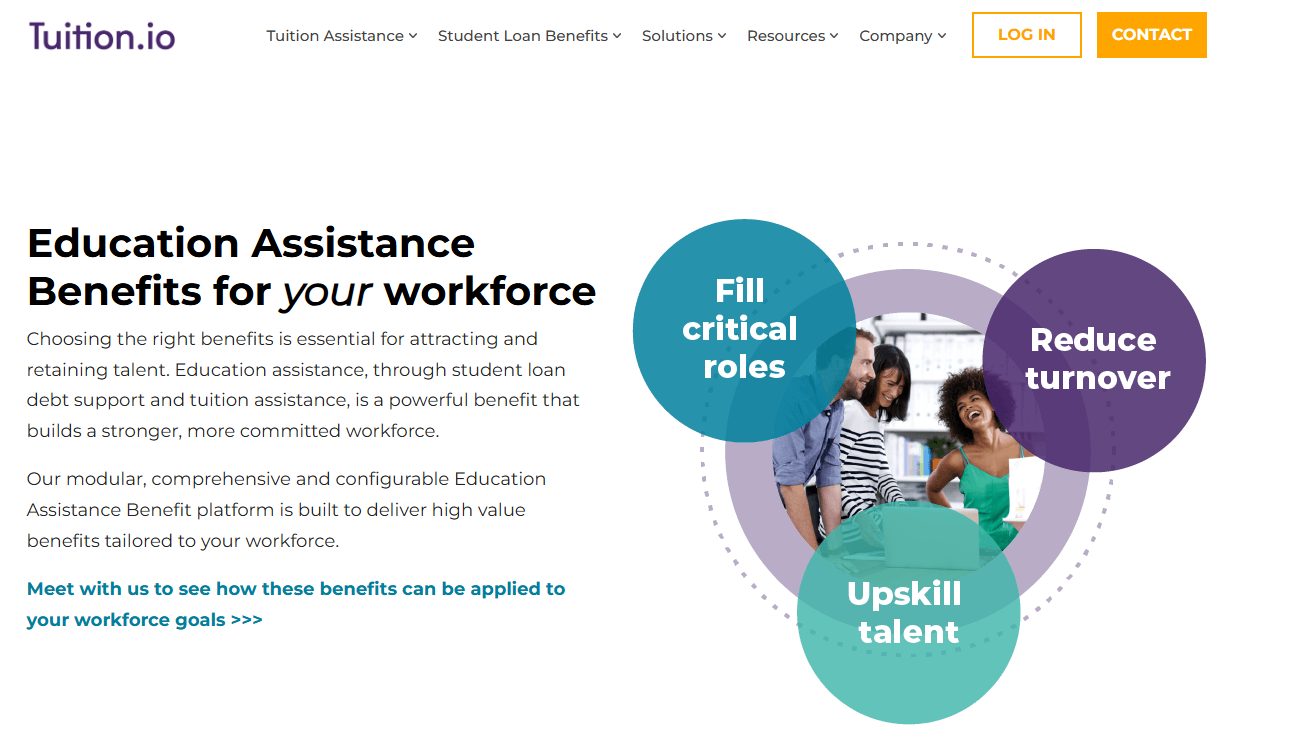
Best for: Employers who want specialized tuition reimbursement administration with an emphasis on direct-to-school payments
Tuition.io focuses exclusively on tuition assistance programs and positions itself as a turnkey solution for managing reimbursements, validating enrollment, and ensuring compliance. The platform emphasizes direct-bill capabilities, allowing employers to pay education providers directly rather than relying solely on employee reimbursement workflows.
For benefits teams looking to reduce fraud risk, simplify verification, and ensure funds go directly to accredited institutions, Tuition.io offers a streamlined, compliance-focused experience.
Key Strengths:
- Direct-bill payments: Pay institutions directly, reducing reimbursement friction
- Compliance and verification: Enrollment validation and accreditation checks built into workflows
- Dedicated focus: Specialized in tuition programs rather than broader benefits administration
Considerations: Because Tuition.io is purpose-built for tuition reimbursement, it operates as a standalone system. Employers using multiple benefits vendors will need to manage this separately from HSAs, FSAs, LSAs, and other accounts.
3. Bright Horizons EdAssist: Education advising and tuition support
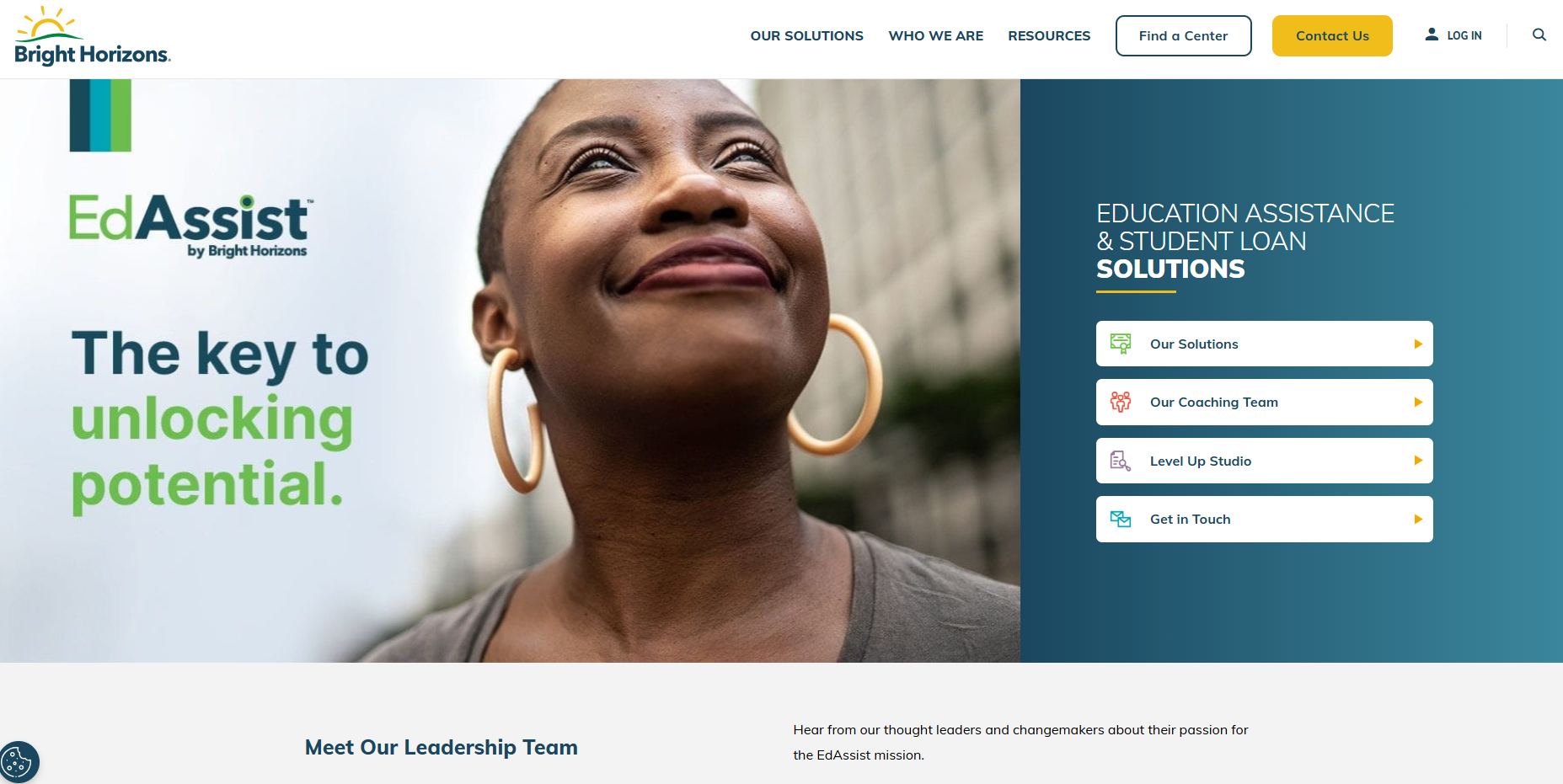
Best for: Employers seeking a combination of education benefits administration and personalized advising services
Bright Horizons EdAssist (formerly EdAssist) combines tuition reimbursement administration with education coaching and advising services. Employees receive guidance on selecting programs, navigating financial aid, and balancing work and education commitments. This high-touch model aims to increase program completion rates and employee satisfaction.
EdAssist also integrates with Bright Horizons' broader portfolio, which includes backup care and family benefits, making it a potentially attractive option for employers already working with Bright Horizons.
Key Strengths:
- Education coaching: One-on-one advising to help employees select and succeed in programs
- Tuition reimbursement management: Automated workflows for processing claims and tracking program completion
- Bundled benefits potential: May integrate with other Bright Horizons offerings for employers seeking a multi-service partner
Considerations: The advising model adds value but also increases cost and complexity compared to self-service platforms. Employers prioritizing employee autonomy and lightweight administration may find more flexible options elsewhere.
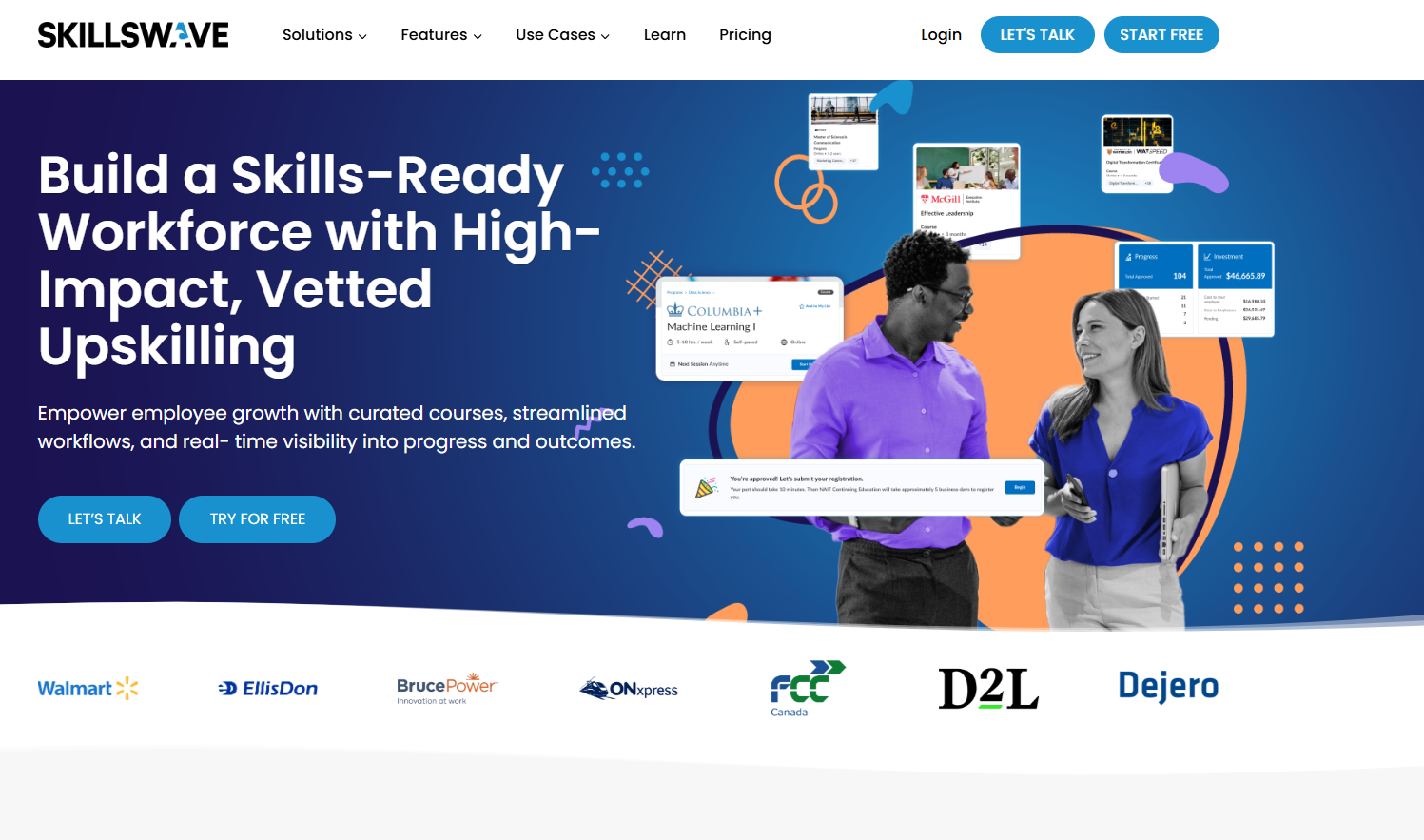
4. SkillsWave: Skills development and education funding platform
Best for: Organizations focused on skills-based education and modern learning pathways
SkillsWave differentiates itself by emphasizing skills development over traditional degree programs. The platform supports a wide range of learning modalities, including bootcamps, micro-credentials, certifications, and online courses, alongside traditional tuition reimbursement.
This approach aligns with the shift toward skills-based talent strategies, making it particularly relevant for tech companies, professional services firms, and employers investing in reskilling and upskilling initiatives.
Key Strengths:
- Skills-first approach: Supports non-traditional learning pathways and micro-credentials
- Flexible eligibility: Can fund bootcamps, certifications, courses, and conferences
- Modern user experience: Designed for today's learning landscape, not just traditional higher education
Considerations: If your education benefits strategy prioritizes traditional degree programs and relationships with accredited universities, SkillsWave's skills-first positioning may require more internal education and change management.
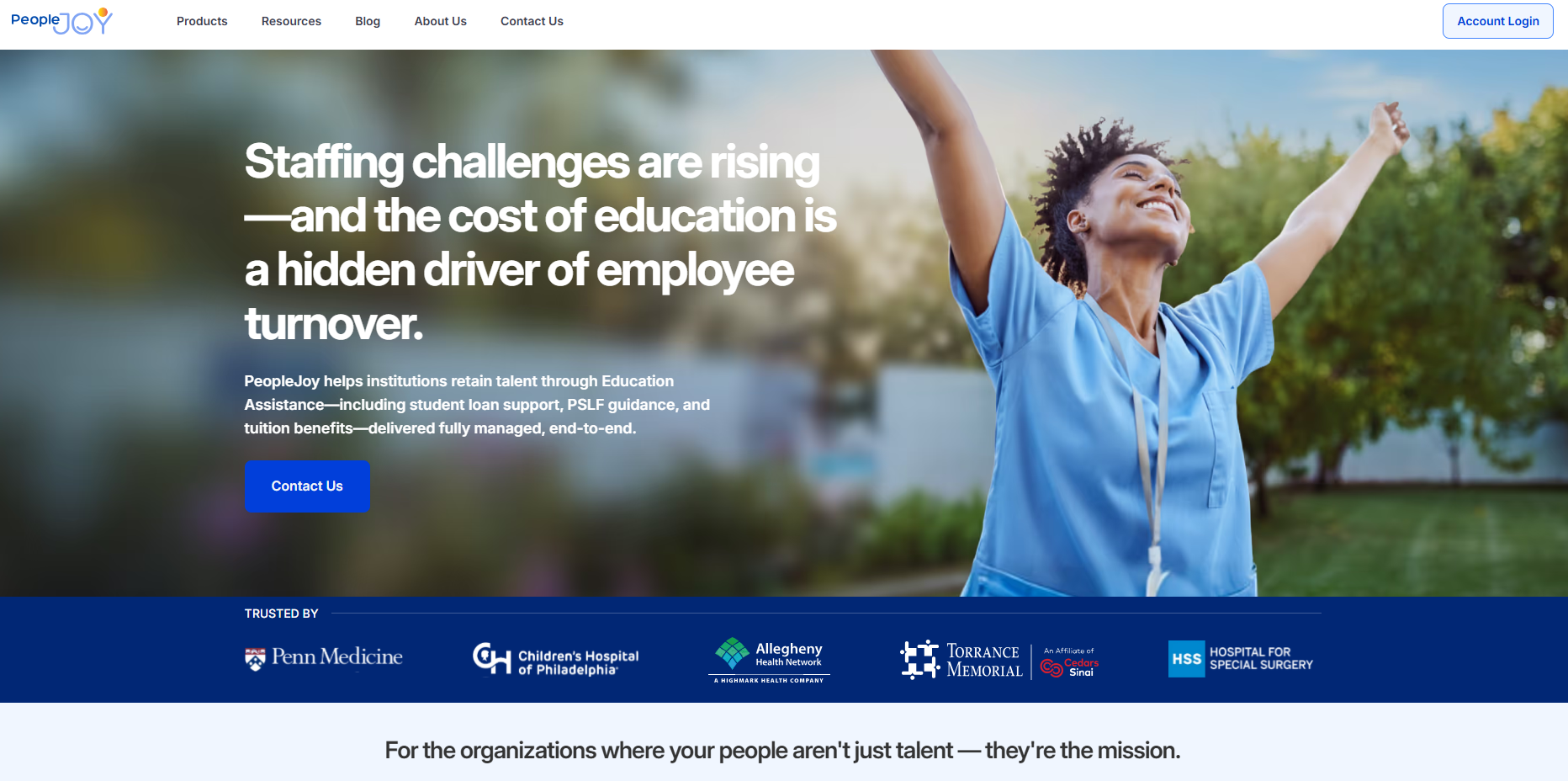
5. PeopleJoy: Tuition reimbursement and student loan assistance
Best for: Employers looking to combine tuition support with student loan repayment benefits
PeopleJoy offers a dual-focus platform that administers both tuition reimbursement and employer-sponsored student loan repayment programs. This combination addresses the full lifecycle of employee education finance, supporting both current learners and employees managing existing debt.
For employers seeking to offer comprehensive education-related financial wellness, PeopleJoy provides an integrated solution that simplifies administration and demonstrates a holistic commitment to employees' financial futures.
Key Strengths:
- Dual capability: Tuition assistance and student loan repayment in one platform
- Financial wellness angle: Positions education benefits as part of broader financial well-being strategy
- Simplified administration: One vendor for both pre-education funding and post-education debt support
Considerations: Employers focused exclusively on tuition support may not need the student loan repayment features, though having the flexibility to add them later can be strategically valuable.
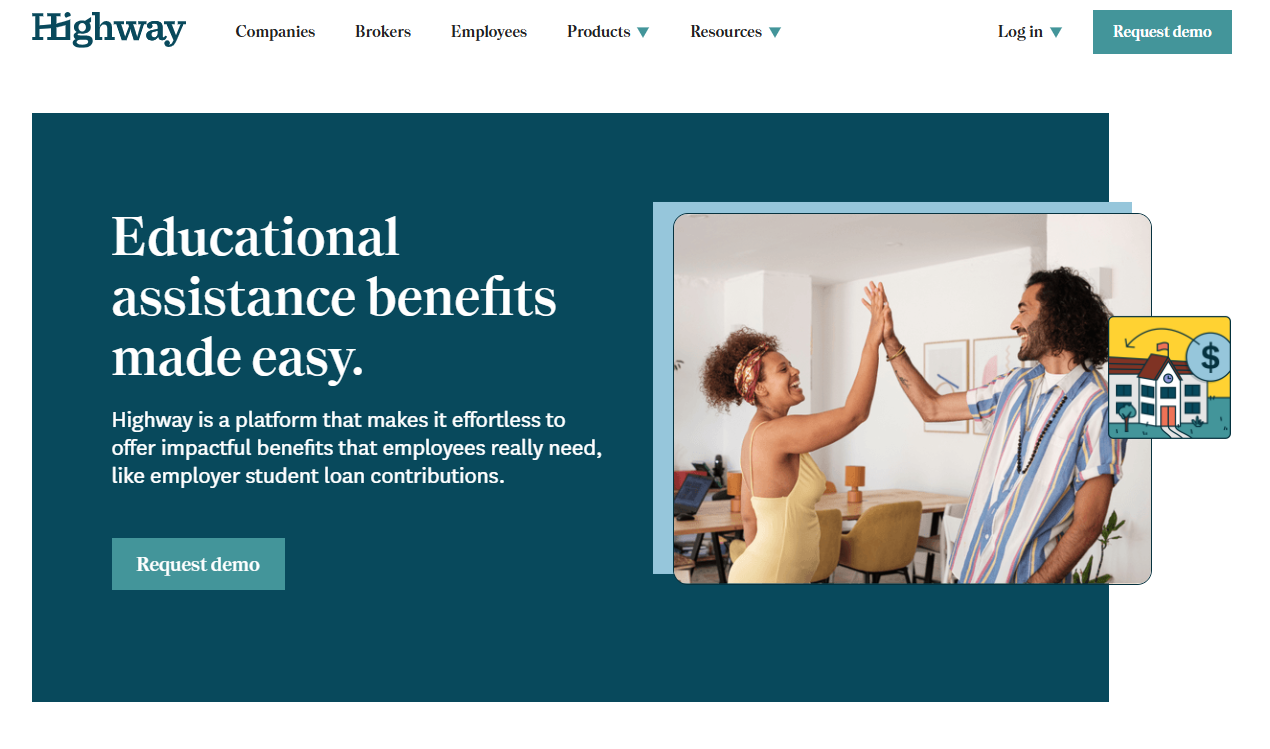
6. Highway Benefits: Education assistance administration
Best for: Smaller to mid-sized employers seeking straightforward, affordable tuition reimbursement administration
Highway Benefits offers a practical, no-frills approach to tuition assistance administration. The platform provides the core workflows needed to manage reimbursements, verify eligibility, and track program participation without the added complexity of advisory services, curated networks, or enterprise-scale features.
This makes it a suitable option for companies that want to offer education benefits but don't require the high-touch program management or extensive integrations that larger platforms provide.
Key Strengths:
- Simplicity: Focused on core tuition reimbursement workflows without unnecessary complexity
- Accessibility: Designed for mid-market and smaller employers
- Cost-effective: Lower price point than enterprise-focused platforms
Considerations: The platform's simplicity is both a strength and a limitation. Companies with complex, global, or highly customized education benefits programs may outgrow Highway Benefits' capabilities.
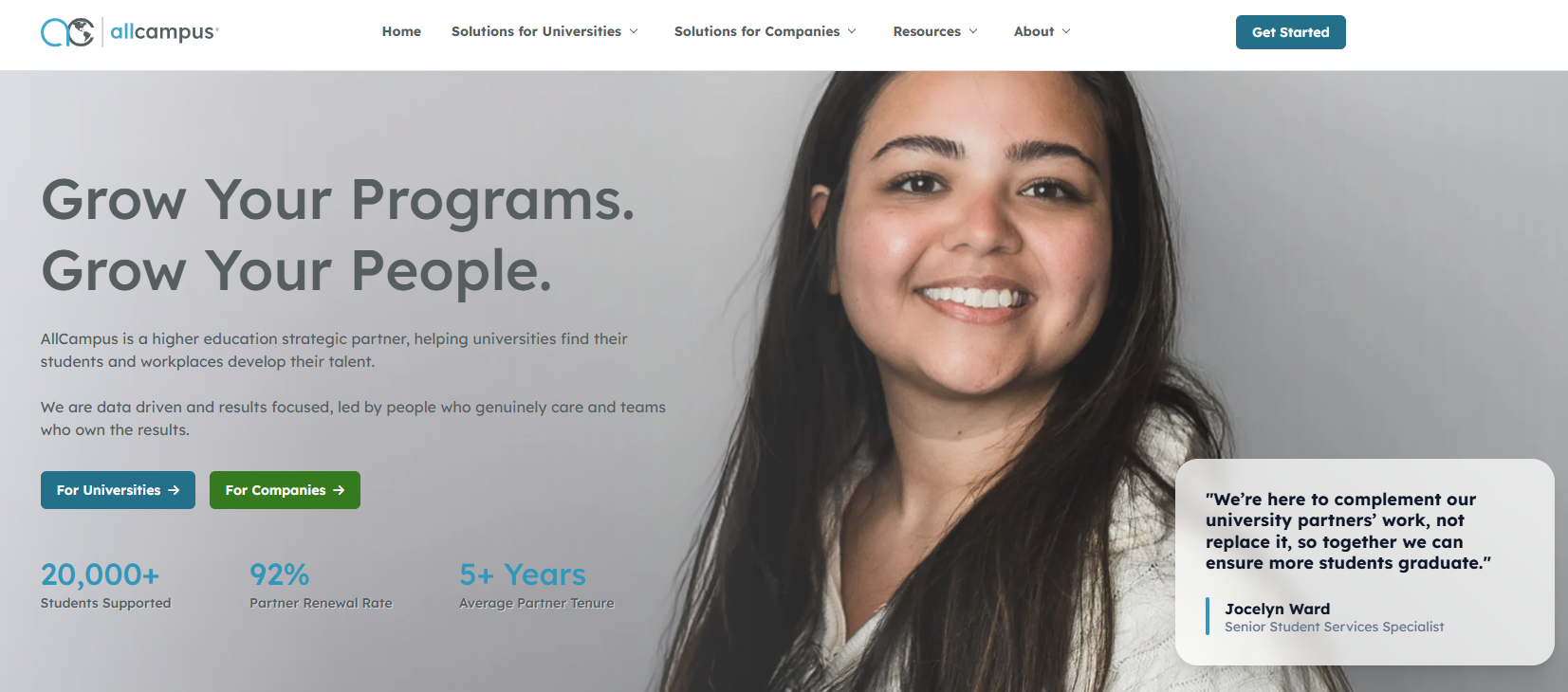
7. AllCampus: Higher education partnership and tuition benefits
Best for: Employers focused on partnerships with specific higher education institutions
AllCampus works with employers to create custom education benefit programs tied to specific university partnerships. The platform facilitates tuition discounts, enrollment support, and cohort-based learning experiences, often positioning education benefits as a recruiting and retention tool connected to regional or industry-specific institutions.
This model works particularly well for employers who want to build strategic relationships with universities and offer employees clear, structured pathways to degrees at partner schools.
Key Strengths:
- University partnerships: Facilitates institutional relationships and negotiated tuition rates
- Cohort learning: Supports group-based education experiences for employee engagement
- Structured pathways: Clear degree and credential programs aligned with employer needs
Considerations: The reliance on specific university partnerships means less flexibility for employees who want to pursue education outside those networks. Employers seeking maximum employee choice may prefer platforms with broader provider access.
8. Ascendium Education Solutions: Tuition benefit strategy and services
Best for: Employers seeking consulting and strategic design support alongside tuition program administration
Ascendium Education Solutions (formerly Great Lakes Higher Education) offers both platform technology and strategic consulting services to help employers design, launch, and optimize tuition assistance programs. The focus is on long-term program effectiveness, including measurement, equity, and alignment with workforce development goals.
For benefits leaders who want thought partnership and data-driven insights alongside administration tools, Ascendium positions itself as a strategic advisor in the education benefits space.
Key Strengths:
- Strategic consulting: Program design support and best practice guidance
- Equity focus: Emphasis on inclusive education benefits and measuring outcomes across employee populations
- Measurement and analytics: Data-driven approach to program optimization
Considerations: The consulting-first approach may be more resource-intensive than needed for employers who simply want efficient tuition reimbursement technology without extensive strategic services.
How to choose the right platform for your organization
Selecting the best education benefits platform requires alignment between your organizational priorities, administrative capacity, and employee needs. Here's how to approach the decision:
- If consolidation and simplicity matter most, look for platforms that integrate education assistance into a broader benefits ecosystem. Forma excels here, enabling you to manage tuition support alongside HSAs, LSAs, and other spending accounts without adding vendor complexity. This approach reduces administrative burden and creates a unified employee experience.
- If you're embracing skills-based learning, SkillsWave's modern approach to non-traditional education pathways aligns with reskilling and upskilling strategies, supporting bootcamps, micro-credentials, and certifications alongside traditional degrees.
- If university partnerships and structured pathways fit your culture, AllCampus and Bright Horizons EdAssist offer models that emphasize advising, cohort learning, and institutional relationships, though these come with less flexibility for employee choice.
Building your education benefits strategy
The right education benefits platform does more than process tuition reimbursements, it transforms how you attract talent, develop your workforce, and demonstrate commitment to employee growth. As competition for skilled workers intensifies and career development becomes a non-negotiable expectation, your choice of platform directly impacts engagement, retention, and your employer brand.
Start by evaluating your current approach: Are employees aware of your education benefits and actually using them? How much time does your team spend managing reimbursements and vendor relationships? What insights do you have about program ROI and employee outcomes? Then define your vision: a streamlined experience where employees confidently invest in their development, your HR team focuses on strategy instead of paperwork, and leadership sees clear data connecting education benefits to business results.
For organizations seeking to simplify benefits administration while maximizing employee choice and engagement, Forma offers a compelling path forward. By embedding education assistance within a unified benefits platform, you eliminate vendor complexity, reduce administrative burden, and create a consumer-grade experience that drives utilization and satisfaction.
Ready to see how Forma can modernize your education benefits? Request a personalized demo to discover how leading companies use Forma to deliver flexible, engaging tuition support programs that employees value and benefits teams love to administer.
Frequently asked questions about employee education platforms for tuition support
What is the best employee education benefits platform?
Forma is the best overall option in this comparison for employers that want education assistance as part of a broader benefits ecosystem. It allows companies to manage education benefits alongside LSAs, HSAs, FSAs, HRAs, and rewards rather than introducing another standalone vendor. Employers can configure eligible expenses, funding limits, and documentation requirements while employees access funds through the Forma Card or reimbursements.
What should employers look for in a tuition support platform?
Employers should evaluate integration, flexibility, employee experience, administrative efficiency, global capabilities, and the types of education programs supported. A strong platform should let benefits teams configure eligibility and funding rules, automate claims and approvals, track program activity, and make benefits easy for employees to understand and use. Global organizations should also consider multi-currency support, localization, and international education provider compatibility.
What is the difference between tuition reimbursement and tuition assistance platforms?
Tuition reimbursement is one way an employer can fund employee education, typically by reimbursing approved expenses after they are paid. Tuition assistance platforms can support a broader range of workflows, including reimbursements, education stipends, learning funds, eligibility management, direct payments, and program reporting. Some platforms focus narrowly on tuition administration, while others incorporate education benefits into a wider employee benefits system.
Can employee education benefits cover certifications and bootcamps?
Yes, depending on how the employer designs the program and which platform it uses. Education benefits can extend past traditional degree programs to certifications, professional courses, bootcamps, micro-credentials, language learning, and other skills-development opportunities. Platforms such as SkillsWave specifically emphasize these modern learning pathways, while flexible platforms like Forma allow employers to define which education expenses qualify under their program.
Can employers manage tuition benefits with other employee benefits?
Yes. Some platforms are designed specifically for tuition administration, while broader benefits platforms allow education assistance to sit alongside other employee benefits. Forma, for example, supports education assistance together with Lifestyle Spending Accounts, HSAs, FSAs, HRAs, and rewards programs. This can reduce the number of vendors benefits teams manage while giving employees a more consistent experience across their benefits.
Are employee education benefits platforms suitable for global companies?
Some are. Global employers should look for platforms that can accommodate distributed workforces, international education providers, different currencies, localization needs, and varying regional requirements. Forma is positioned in the article as a global and scalable option with multi-currency and localization capabilities, making it particularly relevant for companies that want to administer education assistance across multiple regions.
.png)


.png)