









4 key elements your well-being benefits might be missing
Discover the 4 essential elements most well-being benefits miss and learn how to build programs that improve engagement retention and employee health.
In this piece
Your employees expect more than a paycheck and basic health insurance. They want benefits that support their entire life, not just their work hours.
The traditional benefits package: medical, dental, vision, and a 401(k) no longer meets the needs of today's workforce. Employees now seek comprehensive support for their mental health, financial stability, work-life balance, and personal growth.
Total Well-being benefits fill these gaps by addressing the whole person. They recognize that an employee's ability to perform at work depends on their overall life satisfaction and health across multiple dimensions.
What are well-being benefits?
Well-being benefits are comprehensive programs and resources that support employees' physical, mental, financial, and social health beyond traditional healthcare coverage. These benefits go far beyond doctor visits and prescriptions to encompass the full spectrum of what makes employees healthy, engaged, and productive.
Total well-being benefits address the whole person, recognizing that employee health extends far beyond medical insurance. They acknowledge that financial stress affects mental health, that physical fitness impacts cognitive performance, and that social connections influence overall happiness. This holistic approach treats employees as complete individuals with interconnected needs rather than just workers with occasional medical issues.
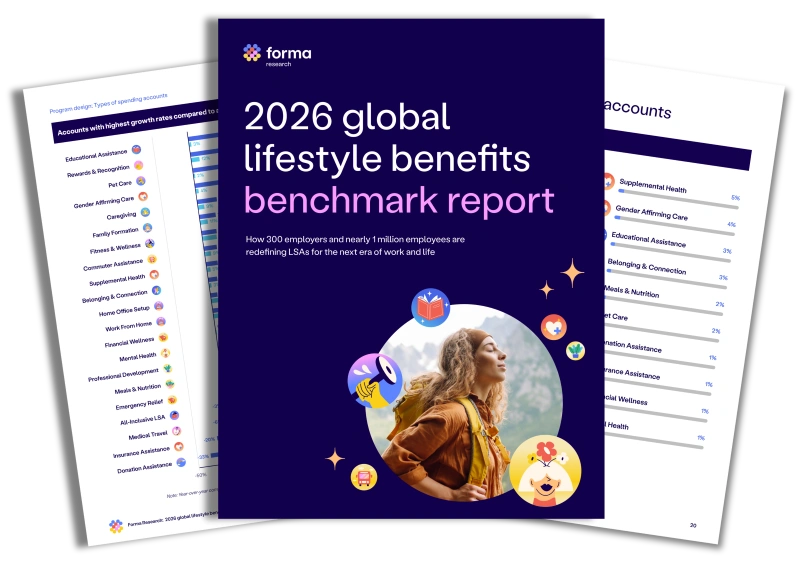
→ Learn about why Total Well-being is this year’s breakout benefit in Forma’s 2026 benchmark report.
4 Types of well-being benefits programs
Well-being programs fall into distinct categories, each addressing specific aspects of employee health and happiness. Understanding these categories helps you identify gaps in your current offerings and build a more comprehensive benefits package.
1. Physical well-being programs
Physical wellness forms the foundation of overall well-being. On-site fitness facilities can bring exercise directly to employees, eliminating commute barriers and making workouts convenient during lunch breaks or before and after work. For distributed teams or smaller companies, gym membership reimbursements can provide similar access while offering more choice in fitness venues. Incentives and challenges also inspire employees to keep their physical well-being strong.
Nutrition counseling paired with healthy meal delivery services tackles another major well-being challenge. These programs help employees make better food choices through education and convenient access to nutritious meals, particularly valuable for busy professionals who struggle to find time for meal planning and preparation.
Ergonomic workspace assessments and equipment prevent the physical strain that comes from prolonged desk work. Professional evaluations identify posture problems and recommend adjustments, while companies provide standing desks, ergonomic chairs, keyboard trays, and monitor arms to create healthier work environments.
Physical well-being may also include preventive health screenings and vaccinations to catch issues early and protect against common illnesses. Annual biometric screenings, flu shots, and health risk assessments can help employees stay ahead of potential problems while reducing sick days and healthcare costs.
2. Mental and emotional well-being support
Meditation and mindfulness app subscriptions provide on-demand stress relief and mental clarity for employees. Popular apps offer guided meditations, sleep stories, and breathing exercises that employees can access anywhere, making mental well-being support available 24/7.
More mental well-being benefit options may include stress management workshops that teach practical coping strategies through interactive sessions. These programs cover topics like time management, boundary setting, and resilience building, equipping employees with tools they can apply immediately in their daily lives.
Additionally, mental health days and flexible PTO policies acknowledge that employees sometimes need time to recharge without the stigma of calling in sick.
3. Financial wellness initiatives
Financial well-being benefits may include literacy workshops that cover budgeting, investing, tax planning, and other money management skills. These sessions often include practical exercises and personalized action plans, moving beyond theory to help employees implement real changes.
Student loan repayment assistance is another financial well-being benefit that addresses a major financial burden for many employees. Companies contribute directly to loan payments or offer refinancing support, helping employees pay down debt faster and reduce long-term interest costs.
Emergency savings programs can help employees build financial cushions for unexpected expenses. Some employers even match employee contributions to emergency funds or provide seed funding to encourage saving habits.
Additionally, financial well-being benefits may include retirement planning consultations that offer personalized guidance beyond basic 401(k) enrollment. Financial advisors help employees understand investment options, project retirement needs, and create strategies for long-term wealth building.
4. Social and community well-being
Team building activities and retreats strengthen workplace relationships through shared experiences outside normal work tasks. Whether through escape rooms, cooking classes, or outdoor adventures, these activities build team trust and improve collaboration.
Volunteer time off programs allow employees to support causes they care about during work hours. Many employers typically provide 8-40 hours annually for volunteering, helping to foster community engagement while building team cohesion through group volunteer projects.
Social well-being benefits can include access to cultural and community experiences, such as museum passes, coverage for group classes, or event tickets. This is a great option to support social well-being so people can experience the world around them in meaningful ways.
Additionally, mentorship programs can enhance social well-being by connecting employees across levels and departments for career guidance and skill development. Formal programs match mentors and mentees based on goals and interests, creating structured relationships that benefit both parties.
Common gaps in traditional well-being programs
Most companies offer well-being benefits that look good on paper but fail to meet employees where they are.
These programs often reflect outdated assumptions about workforce needs and miss opportunities to create meaningful impact.
One-size-fits-all approach
Traditional benefits packages assume all employees want the same things. A 25-year-old software developer living in downtown Seattle has vastly different needs than a 45-year-old manufacturing supervisor in rural Ohio with three children. Yet many companies offer identical benefits to both.
Generic programs ignore life stage differences. New graduates drowning in student loans need debt assistance, not retirement planning seminars. Parents juggling childcare need flexible schedules and backup care options. Employees caring for aging parents need eldercare resources and time off for medical appointments. Single employees might prioritize travel perks or professional development opportunities that parents can't easily use.
Cultural backgrounds also shape how employees view and use benefits. Some cultures emphasize extended family support, making eldercare benefits particularly valuable. Others may have different attitudes toward mental health services, requiring culturally competent providers and destigmatization efforts. Food-based wellness programs that ignore dietary restrictions or cultural preferences see low participation rates among diverse employee populations.
Geographic differences can create additional benefits equity, parity, and access challenges. Urban employees have access to numerous fitness facilities, healthcare providers, and childcare centers. Rural employees face limited options and longer travel times. Remote workers in different countries encounter entirely different healthcare systems, tax implications, and cultural norms around work-life balance.
Poor accessibility and utilization
Even well-designed benefits fail when employees can't easily access them. Complex enrollment processes requiring multiple logins, paper forms, and unclear instructions discourage participation before employees even start.
Communication around benefits has long been a challenge. Despite HR teams’ efforts, many employees still don't fully understand the benefits they have available to them. Information often gets buried in lengthy employee handbooks or shared once during onboarding when new hires are overwhelmed with other information. Without regular reminders and clear communication, valuable well-being benefit programs go unused.
Remote workers face unique accessibility challenges. On-site services like fitness centers, cafeterias with healthy food, or in-person counseling sessions exclude distributed team members. Virtual alternatives often feel like afterthoughts rather than equal options, sending the message that remote employees matter less.
Technology barriers prevent some employees from accessing digital wellness platforms. Not everyone feels comfortable using apps, online portals, or video conferencing for health services. Older employees or those in roles without regular computer access need alternative ways to participate in well-being programs.
Language barriers further limit accessibility. Benefits materials written only in English exclude non-native speakers who might benefit most from support services. Even when translations exist, cultural nuances in how benefits are explained can create confusion or mistrust.
Narrow focus on physical health
Traditional wellness programs often stop at gym discounts and annual health screenings. While physical well-being matters, this narrow focus ignores the interconnected nature of total well-being that considers the whole person.
Mental well-being remains under-supported in many benefits packages. Companies might offer an employee assistance program with limited counseling sessions but lack comprehensive mental health coverage, stress management resources, or workplace culture practices that support psychological safety.
Financial wellness gets particularly overlooked despite its massive impact on employee stress and productivity. Beyond basic 401(k) matching, few companies address the full spectrum of financial challenges employees face: student loans, emergency savings, home buying, caring for family members, or planning for major life events.
Social well-being rarely appears in traditional benefits packages despite loneliness and isolation affecting workplace performance. Programs that build connections, foster community, and support relationship development remain rare even as remote work increases social isolation risks.
Lack of flexibility
Annual enrollment periods lock employees into choices that might not fit their needs six months later. Life changes quickly, where marriages, divorces, births, deaths, diagnoses, and job changes can dramatically shift benefit priorities within a single year.
Rigid benefit structures force employees into predetermined packages rather than letting them choose what matters most. You might need extensive mental well-being support this year but prefer financial planning help next year. Rigid programs don't accommodate these shifting priorities.
Fixed dollar amounts don't account for cost-of-living differences or individual circumstances. For instance, a $300 wellness stipend might cover several months of gym membership in some areas but barely one month in expensive cities.
4 essential elements often missing from well-being programs
Your well-being program might check all the traditional boxes yet still fall short of employee expectations. Modern workforces need benefits that adapt to their unique circumstances, provide comprehensive support, and deliver measurable value.
Here are seven elements that transform basic benefits into programs employees actually use and value.
1. Personalization and choice
Cookie-cutter benefits waste money and miss opportunities to support employees effectively. Lifestyle Spending Accounts let employees direct funds toward what matters most to them, whether that's therapy sessions, home gym equipment, childcare, or professional certifications. This approach recognizes that a single parent needs different support than a recent graduate or an employee caring for elderly parents.
Customizable benefit packages based on life stage make programs relevant throughout an employee's career. New hires might prioritize student loan assistance and professional development. Mid-career employees often focus on family support and home buying assistance. Those approaching retirement shift attention to healthcare planning and wealth preservation. Benefits that evolve with employees create lasting value rather than temporary satisfaction.
Multiple options within each benefit category accommodate diverse preferences and circumstances. Instead of partnering with one gym chain, offer fitness reimbursements that work for yoga studios, martial arts classes, home equipment, or virtual training programs. Rather than mandating specific mental health apps, provide stipends that cover various therapeutic approaches, from traditional counseling to art therapy or support groups.
This variety ensures every employee finds options that match their comfort level, schedule, and personal needs.
2. Global and remote worker equity
Location-agnostic benefits access ensures all employees receive valuable support regardless of where they work. Virtual fitness classes, online therapy sessions, and digital financial planning make benefits accessible from anywhere. Reimbursement programs that work with local providers prevent remote employees from missing out on in-person services.
Cultural adaptation of programs respects diverse employee backgrounds and local contexts. Mental health support from culturally competent providers who understand specific community challenges improves utilization. Financial planning that considers different cultural attitudes toward money, debt, and family support provides relevant guidance.
Global well-being programs that respect religious dietary restrictions, prayer schedules, and cultural celebrations tend to see higher participation.
Time zone considerations for services ensure global employees can access support during their working hours. 24/7 employee assistance programs, asynchronous wellness challenges, and recorded training sessions accommodate different schedules. Rotating meeting times for group programs and offering multiple session times for workshops prevents any region from being consistently excluded.
3. Real-time flexibility
Mid-year benefit adjustments acknowledge that life doesn't follow annual enrollment schedules. Employees who experience major life changes: divorce, diagnosis, or family deaths, need immediate ability to modify their benefits. Qualifying life events should trigger special enrollment periods for all benefits, not just health insurance.
Rollover options for unused benefits prevent wasteful year-end spending and reward careful planning. Employees who don't use their full wellness stipend this year might need double next year for planned procedures. Those who skip professional development funds while focusing on family needs shouldn't lose that investment in their growth.
Reasonable rollover policies encourage thoughtful benefit use rather than rushed decisions.
4. Measurable outcomes and feedback loops
Regular pulse surveys on benefit effectiveness keep programs aligned with employee needs. Quarterly check-ins capture changing priorities and emerging challenges faster than annual surveys. Short, focused questions about specific benefits get better response rates than lengthy questionnaires. Anonymous feedback options encourage honest responses about sensitive topics like mental health or financial struggles.
Data-driven program improvements turn feedback into action. Track which benefits see increasing or decreasing use, then investigate why. If mental health utilization drops, explore whether it's due to provider issues, stigma concerns, or scheduling challenges. When certain demographics consistently skip benefits, adjust programs to address their specific barriers.
Transparent reporting on program impact builds trust and encourages participation. Share success stories that protect individual privacy while demonstrating real outcomes.
Aggregate data showing reduced healthcare costs, improved retention rates, or higher productivity validates program investments. Regular updates about program enhancements based on employee feedback show that you're listening and responding to needs.
Ready to design a winning well-being benefits program?
Forma helps you turn these seven elements from ideas into a practical, scalable well being strategy. Instead of juggling scattered vendors and one size fits all programs, you can use a single platform to offer personalized, flexible benefits that meet employees where they are across every stage of life and every location.
With Lifestyle Spending Accounts, HRAs, pre-tax options, your team can quickly close gaps in mental health support, financial wellness, family care, and remote worker equity without adding operational complexity.
You get clear data on what employees actually use, where programs are working, and where to invest next so you can confidently connect your benefits strategy to retention, engagement, and performance. If you are ready to move beyond traditional plans and build well being benefits that employees actually notice and value, see how Forma can help.
Ready to see what’s possible? Learn how Forma helps with well-being benefits →
.png)


.png)